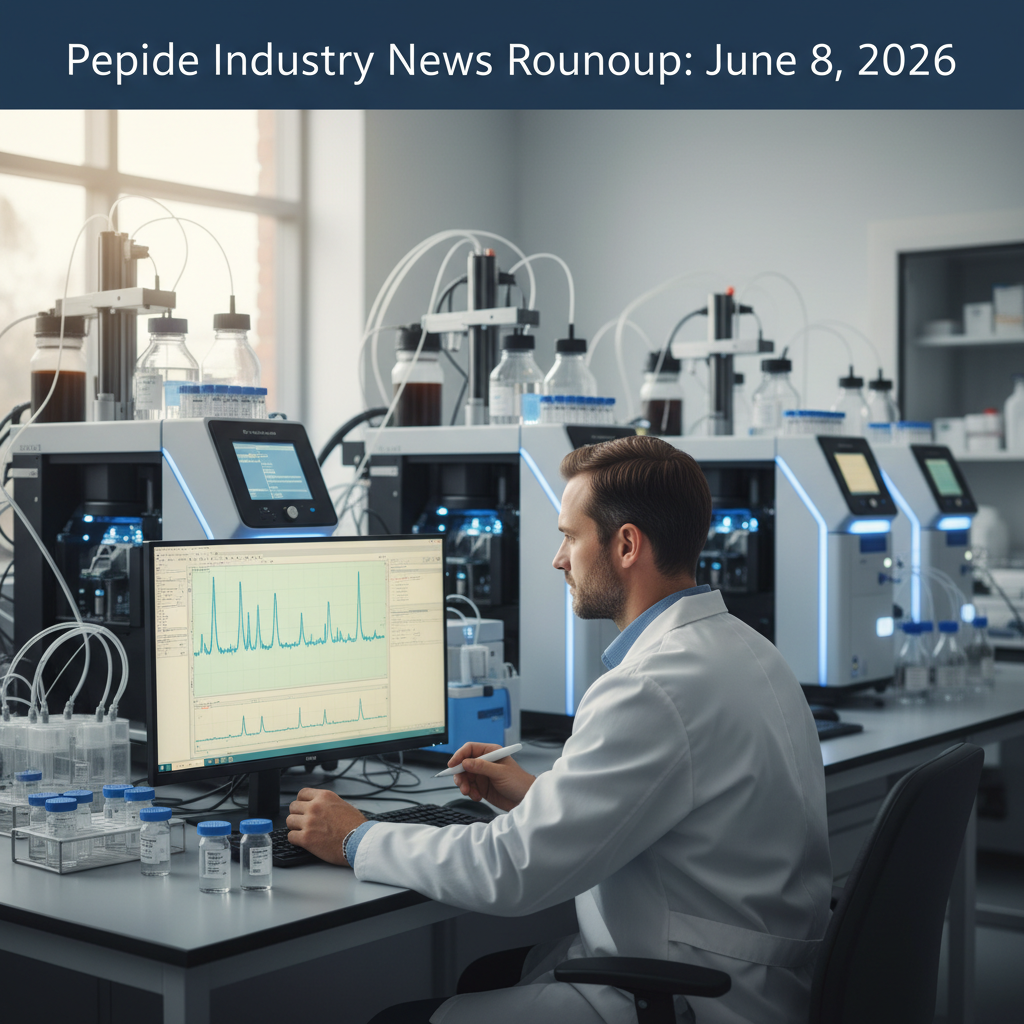
This week in the peptide sector, the competitive landscape for metabolic disease treatments continues to intensify, while regulatory bodies increase their focus on the sources and quality of peptide active pharmaceutical ingredients (APIs). Major investments in manufacturing infrastructure signal long-term confidence in the market, and new clinical data highlights opportunities in therapeutic areas beyond weight management. These developments underscore a unifying theme: the growing importance of analytical chemistry in ensuring peptide quality, from research labs to pharmacies.
Viking Therapeutics Presents Strong Phase II Obesity Data
Viking Therapeutics has released detailed results from its Phase IIb VOYAGE trial for VK2735, a dual GLP-1/GIP receptor agonist. The data, presented at the American Diabetes Association's Scientific Sessions, demonstrated mean weight loss of up to 14.7% over 13 weeks, positioning the candidate as a formidable competitor to existing therapies from Novo Nordisk and Eli Lilly. The trial also reported a favorable safety and tolerability profile, with gastrointestinal side effects noted as generally mild to moderate.
For the industry, this signals that the incretin therapeutic space is far from settled. The emergence of a strong third competitor will likely increase pressure on market leaders and could accelerate innovation in next-generation molecules with improved efficacy or side effect profiles. For developers, the ability to analytically differentiate these complex molecules based on structure, receptor affinity, and impurity profiles is critical. This level of characterization is essential for patent protection, regulatory filings, and demonstrating clinical superiority.
FDA and State Boards Target Non-Pharmaceutical Grade Peptides
The FDA, in a coordinated effort with several state boards of pharmacy, has issued a series of warning letters to compounding pharmacies. The enforcement action, reportedly dubbed "Operation Peptide Purity," specifically targets pharmacies using non-pharmaceutical grade peptide APIs, including salt forms of semaglutide and tirzepatide (e.g., semaglutide sodium, tirzepatide acetate) that are not present in the FDA-approved drug products.
These regulatory actions highlight a critical point of chemistry: a salt form of a peptide is a distinct molecular entity from its base form and may have different properties, including solubility, stability, and bioavailability. The FDA's position reinforces that assumptions of bioequivalence are not permissible without rigorous testing. This development emphasizes the need for compounding pharmacies to secure their supply chain and invest in independent testing to verify the identity and purity of their APIs, ensuring they are using the correct, non-salt form as required by law. Third-party Certificates of Analysis (COAs) are crucial tools for documenting compliance and ensuring patient safety.

